Portfolio
These projects turn the ideas in the courses into working code. Each section gives a short account of the problem and the design; the linked project page has the implementation details, source, and current limits.
Autocode
Abstract. Autocode is a local-first browser application for a coding agent. It lets someone create a session, send a task, watch events arrive, and return to the same timeline after refreshing the page.
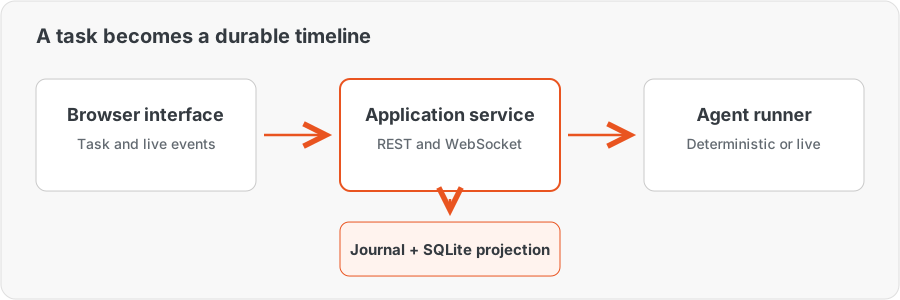
The application service is shared by the web and command-line interfaces. FastAPI routes and a WebSocket stream handle interaction, while an append-only journal and SQLite projection keep the session history durable and queryable. The default runner is deterministic, so the complete flow works locally without a provider key; a live harness is an optional adapter.
Change Planner Agent
Abstract. This read-only agent investigates a proposed code change before any files are edited. It searches a versioned repository snapshot, connects code to tests and history, and produces an evidence-backed plan for review.
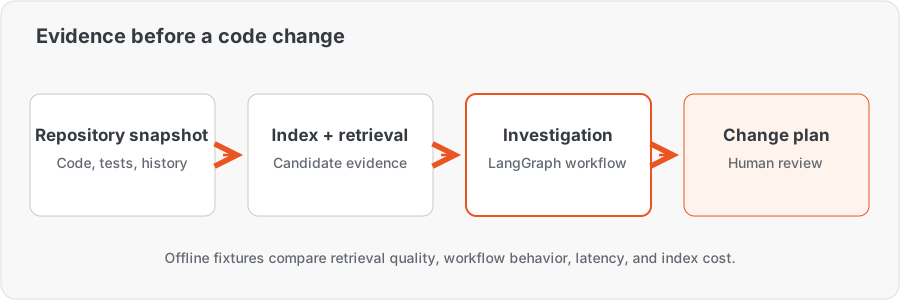
The project keeps retrieval separate from the LangGraph workflow so the quality of candidate evidence can be measured independently of planning and review. Pinned offline fixtures compare retrieval approaches and exercise pauses, retries, and verification. The output is a plan for a human to inspect, not an automatic code change or deployment.
ML Platform
Abstract. This compact platform connects reproducible training and evaluation to model artifacts, batch work, and online serving. It is designed for an ML team that needs an operational path without a large platform engineering group.
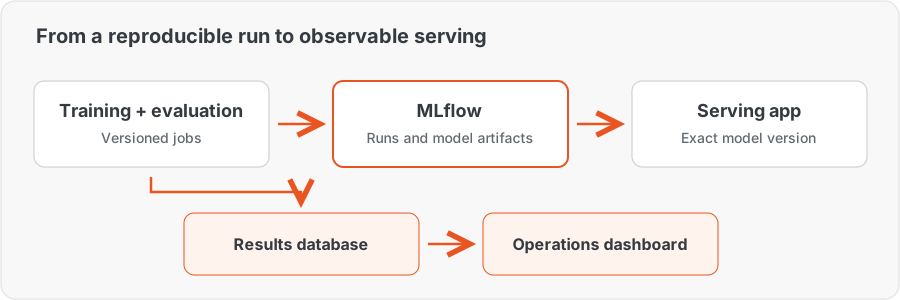
The design separates execution, model lifecycle, operational state, and serving. MLflow records runs and model artifacts; a results database tracks job outcomes; and the serving app loads an exact model version. The repository includes a local course path plus Azure Container Apps infrastructure and deployment components. The infrastructure is a reproducible deployment path, not a claim of a currently running public service.